The following is the complete WordPress-ready HTML.
A food manufacturer has developed a promising new beverage flavour. The research and development team has tested several formulations, sales has received positive feedback from potential buyers, and management wants to launch before the next retail promotion.
One ingredient, however, came from a sample supplied by an overseas flavour house. Another was tested on equipment normally used for certified commercial products. The R&D team has a successful recipe, but the company’s halal function has not yet reviewed every material or confirmed what certification action may be needed.
This is where product innovation becomes a halal-management issue.
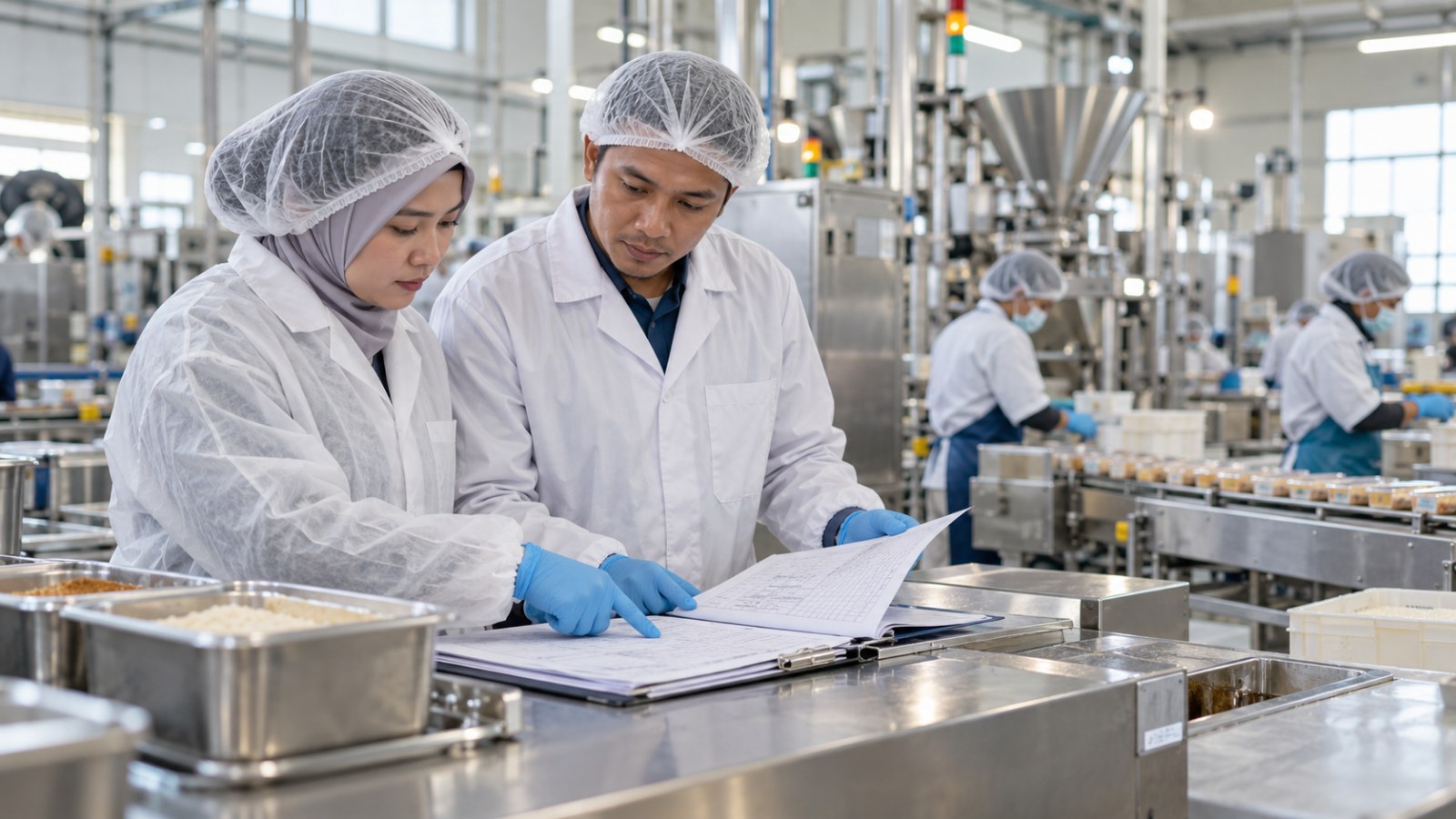
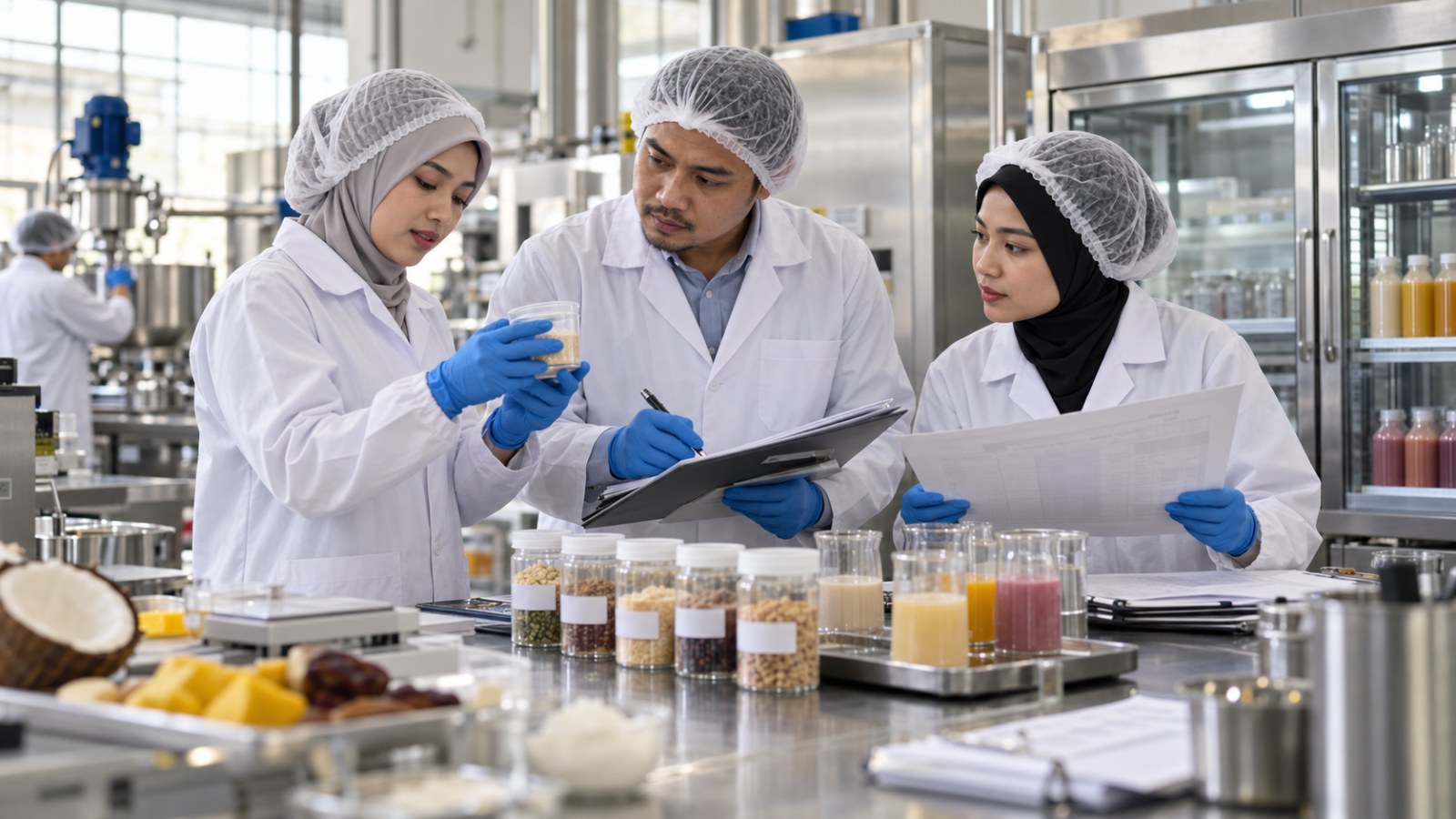
For Malaysian halal-certified food manufacturers, research and development cannot be managed solely through taste tests, cost calculations and product specifications. Experimental ingredients, equipment, storage arrangements and trial records also need appropriate controls.
The practical challenge is to allow product development to continue while preventing unreviewed materials and prototypes from entering certified commercial production.
Why R&D Trials Need Their Own Halal Controls
Food manufacturers generally maintain established procedures for purchasing approved materials and producing approved products. R&D operates differently.
Development teams may order small samples, test unfamiliar ingredient combinations, change suppliers between trials and modify recipes several times before choosing a final formulation.
These activities are commercially normal. The risk appears when the experimental process bypasses controls that apply elsewhere in the business.
Consider several common situations:
- A flavour sample arrives without enough information about its original manufacturer or composition.
- A development technologist uses an alternative emulsifier without first obtaining the applicable supporting documentation.
- A pilot batch is produced on equipment shared with established commercial products, without a documented assessment of previous use and cleaning arrangements.
- A prototype is moved into the normal finished-goods warehouse because no separate storage location has been assigned.
- Marketing distributes trial packs bearing branding or halal-related claims before the relevant approval has been confirmed.
- Management approves a commercial launch based on R&D performance while assuming the product is covered by the factory’s existing certification.
None of these situations should automatically be treated as proof of a halal violation. Each is a reason to investigate the applicable requirements and preserve appropriate control before proceeding.
Understand the Malaysian Certification Framework
In Malaysia, businesses should refer to the applicable Malaysian Halal Certification Procedure, the Malaysian Halal Management System and relevant Malaysian Standards.
The Department of Islamic Development Malaysia (JAKIM), together with the relevant state Islamic religious authorities, administers Malaysian halal certification under the applicable framework.
The Malaysian Halal Management System 2020 provides halal-management arrangements for businesses according to the applicable requirements. MS 1500:2019, confirmed in 2024, establishes general requirements for the manufacturing and handling of halal food.
These documents provide the formal context for determining how experimental materials and manufacturing activities should be controlled.
The company’s halal executive or responsible halal-management personnel should establish which requirements apply to its particular certificate, product category, premises and operating arrangement.
Importantly, a manufacturer’s existing halal certificate should not be assumed to cover every new prototype, formulation or product simply because development takes place at the same factory.
The official Halal Malaysia Portal and applicable guidance from the relevant certification authority should be consulted when determining certification obligations.
1. Separate Experimental Ingredients From Approved Production Materials
One of the most useful controls is a clear distinction between ingredients approved for certified commercial production and ingredients acquired for research.
R&D samples often arrive in small quantities without following the normal purchasing process. A supplier may provide an unlabelled test container, a preliminary specification or a limited technical description.
The purchasing team may not even know the sample exists.
A practical solution is to establish a dedicated R&D material register.
For each sample, record:
- Internal sample identification number.
- Ingredient name and intended development use.
- Commercial supplier and original manufacturer, where applicable.
- Manufacturing source and relevant product specification.
- Batch or lot identification.
- Available halal-related supporting documentation.
- Date received and storage location.
- Current review status and any restrictions on use.
- Person responsible for approval or further investigation.
The register should not simply classify an ingredient as acceptable because the supplier describes it as suitable for halal products.
The company’s responsible halal function needs to determine what documentation and assessment are necessary under the applicable Malaysian requirements.
A useful internal status system might distinguish between materials awaiting review, materials permitted only for a specifically controlled investigation, and materials formally approved for the intended certified operation.
These are internal management categories, not official halal certification statuses. Whether an ingredient can be handled or tested in a particular environment must be determined through the relevant risk assessment and authority requirements.
2. Assess the Trial Before It Starts
R&D approval is more effective when it happens before materials reach a mixing tank or production machine.
A short trial request can identify the important questions without creating unnecessary bureaucracy.
The development team should describe the proposed product, the experimental ingredients, the equipment needed, the intended location and what will happen to the resulting samples.
Quality assurance and the responsible halal personnel can then review the plan before the trial begins.
A Practical R&D Trial Risk-Control Matrix
| Trial Activity | Potential Control Gap | Recommended Internal Action |
|---|---|---|
| Testing a new flavour | Incomplete ingredient or manufacturer evidence | Review composition, origin and applicable supporting documents before authorising the trial arrangement |
| Using a new processing aid | Material not included in the existing approved process | Assess the material and determine any required certification action |
| Using shared manufacturing equipment | Unclear previous use or cleaning requirements | Assess equipment history, product-contact materials and applicable cleaning controls |
| Storing experimental materials | Mixing of development stock with approved commercial stock | Use controlled identification, access and physical storage arrangements |
| Producing a pilot batch | Unreviewed formulation or operational differences | Approve the trial protocol and maintain a complete batch record |
| Distributing product samples | Claims or presentation exceed confirmed product status | Review intended recipients, labelling, applicable food rules and halal-related claims before distribution |
| Moving to commercial production | Assuming R&D approval equals certification approval | Complete formal halal, quality and regulatory release checks |
This matrix is a proposed internal control tool rather than an official Malaysian certification checklist. It should be adapted to the company’s circumstances and current authority requirements.
3. Decide Where Experimental Work Can Take Place
Many smaller manufacturers do not have a dedicated pilot plant. R&D trials may take place in the same building, or potentially on the same equipment, as normal production.
That arrangement requires careful evaluation.
The company should establish whether the proposed trial is compatible with its certified operations and whether the applicable framework permits the intended use of the facilities.
Relevant questions include:
- Will experimental materials enter an area used for certified production?
- Are the materials and their relevant sources adequately assessed?
- What equipment and utensils will contact the trial ingredients?
- Can the trial be appropriately separated from routine production?
- Are cleaning and other required controls defined and documented?
- Could remaining trial material enter a later commercial batch?
- Who will inspect and release the equipment before routine use resumes?
Physical separation alone should not be presented as automatic permission to introduce any experimental material into a halal-certified facility.
Depending on the materials involved, the premises and the applicable certification conditions, a proposed trial may need to be relocated, redesigned or deferred until the appropriate authority requirements have been clarified.
The correct arrangement is the one supported by the applicable requirements and documented assessment, not merely the arrangement that is convenient for the R&D team.
4. Keep Pilot Batches Traceable
Small trial batches can create large documentation problems when nobody records what was actually produced.
Early formulations frequently change. A technologist may test three stabiliser concentrations, adjust a flavour dosage or substitute one ingredient sample between experiments.
Without adequate records, the team may later struggle to identify which formulation produced the successful result.
For each controlled pilot batch, maintain an appropriate record covering:
- Unique trial and batch identification.
- Date and location of production.
- Approved trial instructions and responsible personnel.
- Actual ingredients and batch or lot numbers used.
- Quantities and relevant formulation revisions.
- Equipment involved and required pre-use checks.
- Departures from the authorised trial protocol.
- Quantity of material produced.
- Testing, retention, disposal and sample-distribution records.
- Post-trial equipment and area clearance.
These records are useful for halal oversight, food safety investigation, product repeatability and commercial development.
They also help prevent an experimental formula from being copied into commercial production without the required review.
5. Control Samples Before They Leave the Factory
R&D products do not always remain in the laboratory.
Sales teams may request samples for a supermarket buyer, distributor or prospective overseas customer. Management may arrange a private tasting. A food manufacturer may distribute test packs during a development meeting.
Before any sample is transferred or distributed, the business should establish whether that activity is permitted under the applicable food, halal certification, labelling and other relevant requirements.
Trial samples must not be represented as halal-certified merely because they were made by a company that holds certification for other products.
Similarly, using an official halal logo or making a halal-related claim requires the appropriate authorisation and must remain within its permitted scope.
Malaysia’s MYeHALAL service terms impose conditions on the use of halal certificates and logos. Businesses should verify the current requirements rather than creating their own assumptions about prototype labelling.
Internally, it is useful to define who can authorise the distribution of a trial sample, which documents must be reviewed and how sample recipients are recorded.
A sample-release decision should not be left solely to the sales team’s commercial deadline.
6. Create a Formal Gate Between R&D and Commercial Production
A successful formulation does not automatically become an approved commercial product.
Technical development may be complete while supporting ingredient documents, product records, certifications, labels or manufacturing instructions remain unresolved.
A formal transfer process creates a clear decision point.
Commercial Production Readiness Checklist
- Freeze the intended formulation. Establish which recipe version is proposed for production and identify all actual ingredients, processing aids and relevant sources.
- Complete material verification. Check the evidence required for each ingredient and confirm that no experimental substitution remains unresolved.
- Review the manufacturing process. Confirm the proposed equipment, premises, handling arrangements, cleaning controls and relevant production instructions.
- Confirm the applicable halal certification action. Determine whether changes, updates, applications or other approvals are required under the current framework before use or marketing.
- Complete separate food regulatory checks. Assess relevant food safety, product composition, labelling and other applicable legal requirements.
- Approve product and purchasing master data. Ensure commercial systems cannot accidentally order or manufacture an unapproved formulation.
- Review packaging and claims. Verify that the proposed product presentation matches its actual approvals and permitted claims.
- Authorise commercial release. Record the decision by the personnel responsible for quality, halal compliance and operational release.
The objective is not to create a single approval that replaces official certification. It is to ensure that the company’s own commercial release occurs only after all applicable requirements have been addressed.
7. Make Responsibilities Clear Across Departments
Halal R&D management often fails at departmental handovers rather than during technical testing.
R&D may assume purchasing verified the supplier. Purchasing may assume quality verified the ingredient. Production may assume the recipe was released because it appears in the manufacturing system.
A responsibility matrix can prevent those assumptions from becoming operational practice.
| Function | Main Responsibility | Evidence or Output |
|---|---|---|
| R&D | Define the trial, formulation, materials and technical results | Trial request, formulation history and batch records |
| Procurement | Identify suppliers and obtain relevant manufacturer information | Supplier and material documentation |
| Halal management | Assess applicable halal requirements and coordinate necessary authority actions | Documented assessment and compliance decision |
| Quality assurance | Review relevant quality, food safety and process controls | Quality approval and technical records |
| Production | Operate only under the authorised trial or production arrangements | Execution and equipment records |
| Sales and marketing | Control sample requests and product claims | Authorised sample and artwork release |
| Management | Provide resources and enforce approval boundaries | Defined responsibilities and escalation decisions |
These responsibilities should be adapted to the company’s size and the organisational arrangements required under its applicable halal-management framework.
8. Treat Failed Trials as Useful Control Evidence
Not every research project produces a successful product. A formulation may prove commercially unsuitable, too expensive or technically unstable.
Some trials may also reveal that a proposed material, process or production arrangement cannot proceed without additional evidence or changes.
Those findings should be recorded rather than forgotten.
For example, if an ingredient sample cannot be sufficiently verified, the development team can document why it was not accepted and identify alternative sourcing requirements.
If equipment arrangements prove unsuitable, the trial record can explain what must change before another attempt.
This prevents the same unresolved material or process from being introduced again during a future project.
It also creates useful organisational knowledge. A manufacturer with several development teams can learn from previous approval decisions rather than restarting the same investigation each time.
9. Measure Innovation Without Confusing It With Certification
Product development creates outcomes that management can measure independently of halal compliance.
Examples include the number of commercially launched products, the time required to complete development, the proportion of projects passing defined technical assessments and the scale of a documented manufacturing innovation.
These measures can help manufacturers evaluate whether their R&D investment is producing meaningful results.
Exceptionally measurable and verifiable business milestones may also be relevant to independent achievement recognition. Where appropriate, companies can explore applying for Asia Record recognition for an eligible achievement supported by credible evidence.
Such recognition is separate from halal certification. It does not establish that a product, ingredient, facility or manufacturing process satisfies halal requirements. Those matters remain under the applicable halal certification framework and competent authorities.
Common Mistakes to Avoid
- Assuming small quantities are exempt from review. The amount of an experimental material does not, by itself, establish whether its intended use is acceptable.
- Accepting supplier statements without adequate evidence. A general commercial assurance is not a substitute for the supporting information required by the applicable framework.
- Using approved commercial equipment without reviewing the trial. Experimental work can affect equipment, material and cleaning controls.
- Treating internal R&D approval as official halal approval. Technical success and certification status are different decisions.
- Losing formulation history. Incomplete trial records make later verification and corrective investigation difficult.
- Distributing prototypes before reviewing claims. Samples and promotional activities need appropriate assessment before release.
- Allowing commercial urgency to override unresolved questions. A launch deadline should not become an informal approval mechanism.
Build a Product Development Process That Can Be Audited
A well-managed R&D process should allow a company to answer several questions without searching through emails and laboratory notebooks.
Which experimental materials entered the development process? Who supplied them? What supporting information was available? Where were they handled? Which trial batches used them? What happened to the resulting products? Who authorised the transition into commercial production?
When these answers are documented, product innovation becomes easier to manage across technical, commercial and compliance teams.
For Malaysian halal-certified manufacturers, the best approach is to incorporate R&D into the company’s wider halal-management and quality systems while determining the correct treatment of each trial under applicable requirements.
That does not mean treating every experiment as a finished commercial product. It means recognising that experimental work needs defined boundaries, appropriate evidence and a controlled route into normal production.
The result is a development process that supports innovation without allowing uncertainty to become an unreviewed manufacturing decision.