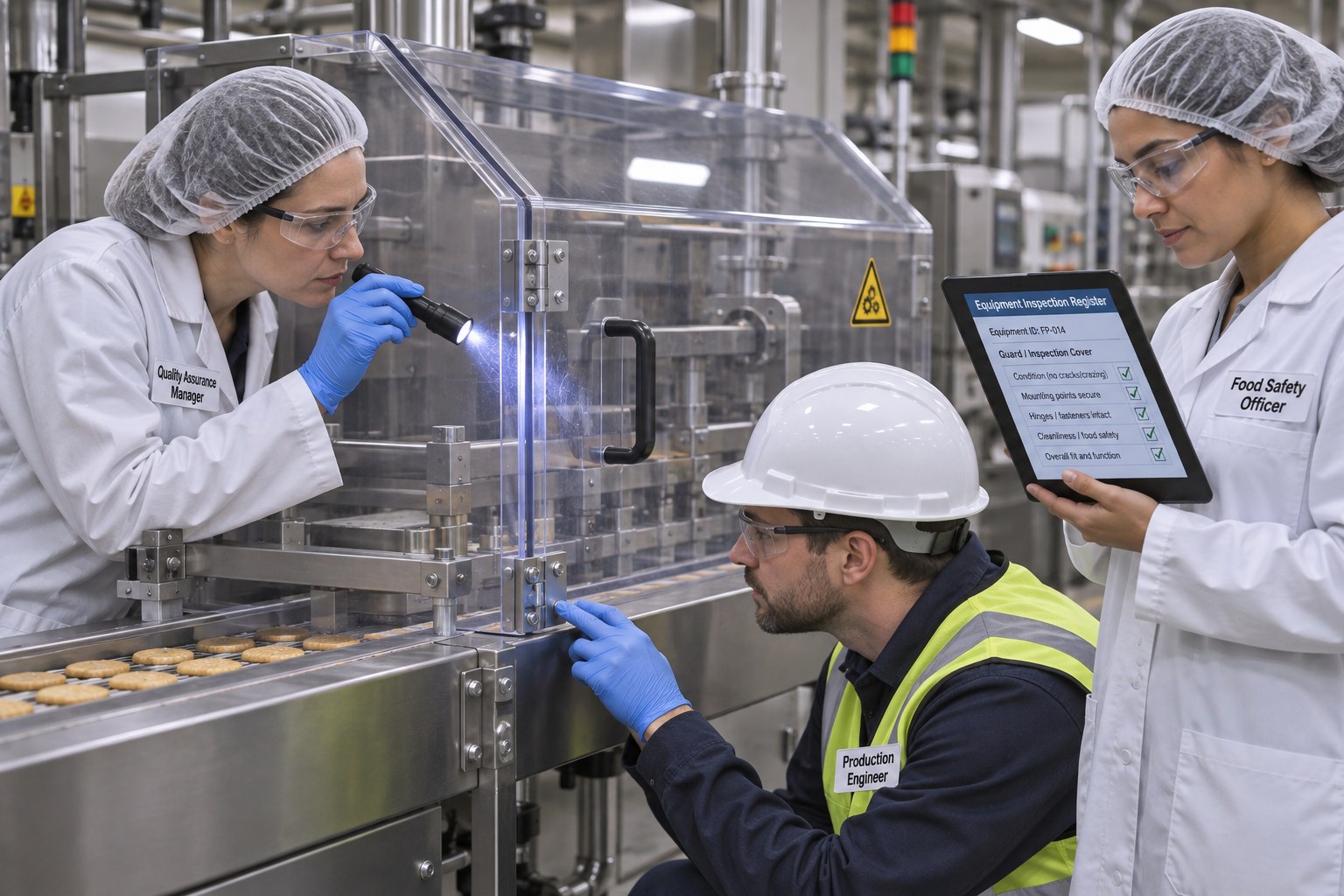

A food manufacturer in Malaysia produces chocolate biscuits, fruit-flavoured snacks and powdered beverages using several shared production facilities. As demand grows, the company introduces new recipes containing milk, peanuts and soy-based ingredients.
From a commercial perspective, the expansion creates opportunities to serve new customers and improve factory utilisation. From an operational perspective, however, it introduces additional responsibilities.
The company must maintain its halal assurance controls while also preventing unintended exposure to food allergens. An ingredient may have appropriate halal documentation and still present a serious risk to consumers with a particular food allergy.
This distinction makes halal food allergen management an important consideration for manufacturers expanding their businesses across Asia.
Halal Assurance and Allergen Management Serve Different Purposes
Halal certification and food allergen management should not be treated as interchangeable forms of assurance.
Halal certification concerns compliance with the applicable halal certification framework. Allergen management focuses on protecting consumers from unintended exposure to substances that may trigger allergic reactions.
Halal certification does not establish that a product is free from allergens. Similarly, a product described as free from a particular allergen is not automatically halal-certified.
| Control Area | Halal Assurance | Allergen Management |
|---|---|---|
| Primary purpose | Maintain applicable halal compliance | Protect consumers from unintended allergen exposure |
| Ingredient assessment | Source, composition and supporting halal evidence | Allergenic ingredients and potential cross-contact |
| Production controls | Protection of halal integrity | Management of allergen transfer between products |
| Product information | Accurate halal-related representations | Accurate allergen declarations |
| Verification | Applicable halal certification framework | Food safety controls and applicable regulations |
Although their objectives differ, both systems rely on accurate information, disciplined manufacturing practices and effective communication between departments.
Understand the Regulatory Responsibilities
In Malaysia, manufacturers should distinguish between the halal certification framework administered by the relevant Malaysian halal authorities and food safety and labelling requirements administered by the Ministry of Health Malaysia.
The Halal Malaysia official portal provides information concerning halal certification and management documentation.
Food manufacturers should separately consult the Ministry of Health’s Food Regulations 1985 and associated food labelling guidance when determining the requirements applicable to their products.
Internationally, the Codex Alimentarius Code of Practice on Food Allergen Management for Food Business Operators provides a useful technical reference for developing manufacturing controls.
Exporters should also review destination-market requirements. A product label prepared for Malaysia should not automatically be assumed suitable for every overseas market.
1. Build a Combined Ingredient Information Register
One of the most effective starting points is to create a central ingredient register that serves both halal assurance and food safety teams.
Procurement departments often maintain supplier information, while quality assurance teams retain technical specifications and halal executives manage supporting halal documents. When these records are separated, important changes can be overlooked.
A combined register can include:
- Ingredient name and internal material code.
- Original manufacturer and commercial supplier.
- Ingredient composition and technical specifications.
- Applicable supporting halal documentation.
- Declared allergens and supplier cross-contact information.
- Approved products and production applications.
- Storage and handling instructions.
- Document revision history and internal approval status.
Consider a seasoning manufacturer that purchases a flavouring preparation from an approved supplier. The commercial product name may remain unchanged even when its composition or manufacturing arrangements are revised.
The purchasing team should not assume that historical approval covers every subsequent version. Changes should be assessed through an established review process involving the relevant personnel.
This is particularly important when changing an ingredient or supplier in halal-certified manufacturing.
2. Map Where Allergen Cross-Contact Could Occur
Factory managers should examine the movement of ingredients and products throughout their facilities instead of limiting their assessment to individual production machines.
A practical exercise involves following an ingredient from the receiving area through storage, preparation, processing and finished-product handling.
| Operational Area | Potential Risk | Suggested Internal Control |
|---|---|---|
| Receiving | Incorrect or unidentified ingredient deliveries | Match deliveries against approved material records |
| Storage | Damaged containers or ingredient spills | Use suitable containers and risk-based segregation |
| Weighing | Residue transferred through shared utensils | Assign appropriate utensils and handling procedures |
| Processing | Residue remaining from previous production runs | Apply approved changeover controls |
| Internal transport | Material transfer through shared containers | Identify container contents and cleaning status |
| Packaging | Incorrect allergen information on finished products | Verify packaging against the actual formulation |
Such assessments can help manufacturers identify problems that may not be apparent when reviewing ingredient documentation alone.
3. Schedule Production According to Risk
Production planning should consider more than customer deadlines, machine availability and manufacturing costs.
Imagine a snack manufacturer using one production line for several recipes with different allergen profiles. Repeatedly switching between these products may increase the complexity of cleaning and release activities.
Where technically appropriate, planners can group compatible products into production campaigns. However, sequencing decisions should be supported by the factory’s risk assessment rather than assumptions about individual ingredients.
Before confirming a schedule, production planners should establish whether the necessary materials, equipment, cleaning resources and quality verification activities are available.
Changes made during the working day should also be communicated clearly. A last-minute adjustment to the production sequence should trigger a review of the affected changeover arrangements.
4. Validate Cleaning Rather Than Relying on Appearance
A machine that looks clean is not necessarily free from allergenic residues.
Manufacturers should distinguish between developing a cleaning method that is demonstrably effective and checking that employees have performed that method correctly during routine operations.
Depending on the equipment and identified hazards, appropriate analytical testing may support the cleaning assessment. The method should be selected by competent personnel who understand its suitability and limitations.
Cleaning teams should pay particular attention to difficult-to-access areas, detachable components, transfer pipes and equipment surfaces that regularly accumulate residues.
Halal assurance controls must remain in place throughout these activities. Where a separate halal-related contamination concern arises, the factory should follow the applicable halal procedures and seek guidance from the relevant authority when necessary.
An ordinary allergen cleaning procedure should not be assumed to resolve every type of halal integrity incident.
5. Prevent Incorrect Allergen Information on Packaging
Accurate manufacturing controls can be undermined when the finished product carries the wrong packaging.
This risk becomes more significant when a manufacturer produces multiple flavours, formulations, private-label products or export versions with similar packaging designs.
Consider a beverage powder manufacturer supplying several retail brands. Different products may use similar packaging dimensions while having different ingredient compositions.
The packaging team should verify the approved artwork against the product being manufactured before releasing the finished goods.
A practical release review should establish whether:
- The packaging corresponds to the correct finished-product code.
- The ingredient declaration matches the approved formulation.
- The applicable allergen information has been reviewed.
- The packaging version is appropriate for the destination market.
- Any halal-related representations remain accurate and authorised.
Manufacturers should also reassess packaging information whenever recipes change. The same principles apply when changing a product name, brand or packaging.
6. Establish a Clear Response to Unexpected Allergen Risks
Even established manufacturing systems can encounter unexpected events, including damaged ingredient containers, incorrect material selection, incomplete cleaning or supplier documentation discrepancies.
Employees should understand who has the authority to stop production and prevent potentially affected products from being released.
A factory’s incident response framework should connect production, warehouse, quality assurance and halal personnel.
When a potential problem is identified, the immediate priority should be to contain the affected materials or products, preserve relevant records and assess the extent of the incident.
If potentially unsafe products have already entered distribution, the company should assess the situation promptly under its food safety and recall procedures, including any applicable notification obligations.
Clear communication during production shift handovers can help prevent unresolved incidents from being overlooked by incoming employees.
7. Measure Operational Performance Without Encouraging Unsafe Shortcuts
Manufacturers investing in stronger production controls should establish performance indicators that demonstrate whether their systems are improving.
| Performance Indicator | What It Measures |
|---|---|
| Ingredient documentation completeness | Availability of required material information |
| Changeover verification completion | Completion of scheduled production checks |
| Packaging verification accuracy | Consistency between products and approved artwork |
| Traceability exercise completion time | Ability to identify affected production and distribution records |
| Corrective action closure | Progress in resolving identified operational weaknesses |
Management should interpret these indicators together. A shorter cleaning time, for example, is not necessarily an improvement if verification demonstrates that the revised procedure is ineffective.
Businesses that achieve exceptional, objectively measurable manufacturing milestones may separately consider business achievement recognition. Where a result is significant, comparable and supported by credible evidence, manufacturers can explore the assessment process through Asia Record’s official website.
Such recognition concerns the measurable achievement itself. It does not establish halal compliance, allergen safety or regulatory approval. Routine compliance should remain a fundamental operating responsibility rather than an achievement claimed solely for promotional purposes.
A 30-Day Implementation Roadmap for Manufacturers
Smaller manufacturers do not necessarily need an expensive software platform to begin improving their allergen management arrangements. A structured implementation plan can help management identify priorities and allocate resources.
Week 1: Establish the Current Position
- Review the existing ingredient register.
- Identify missing supplier information.
- Map products and their associated allergen profiles.
- Assign responsibilities across relevant departments.
Week 2: Review Manufacturing Risks
- Examine shared production equipment.
- Identify potential material transfer points.
- Review existing production schedules and changeover arrangements.
Week 3: Strengthen Operational Procedures
- Review cleaning and verification methods with competent personnel.
- Improve packaging verification procedures.
- Establish clear reporting and product-hold responsibilities.
Week 4: Review Readiness and Remaining Gaps
- Conduct an internal traceability exercise.
- Review unresolved ingredient and manufacturing concerns.
- Assess employee understanding of the updated procedures.
- Establish deadlines for outstanding corrective actions.
The roadmap should be treated as an initial improvement programme rather than a guarantee of full implementation within one month. Technical validation, regulatory reviews and facility modifications may require additional time.
Building Consumer Trust Through Consistent Manufacturing Controls
As halal food manufacturers expand across Southeast Asia, shared facilities, new ingredients and increasingly diverse product portfolios can create additional operational challenges.
Businesses that maintain accurate ingredient information, effective production controls and reliable product documentation are better positioned to manage these challenges.
Halal assurance and allergen management should remain distinct responsibilities supported by coordinated manufacturing systems.
For manufacturers pursuing long-term growth, the objective is not simply to produce more food. It is to increase production while maintaining the discipline, transparency and accountability that consumers and commercial partners expect.