
A food manufacturer in Malaysia finishes producing a batch of chocolate-flavoured biscuits and prepares the same production line for a different product. The production team removes the remaining ingredients, cleans the equipment and collects packaging materials for the next manufacturing order.
However, during the transition, residual ingredients remain inside a mixing chamber, an ingredient container from the previous batch has not been removed, and the production supervisor receives confirmation that the equipment is ready before all verification activities are complete.
Each issue may appear minor. Together, they can create contamination, product identification and traceability risks.
For halal food manufacturers operating multiple product lines or producing several product varieties on shared equipment, managing product changeovers is an important part of maintaining consistent manufacturing controls.
Why Product Changeovers Create Manufacturing Risks
A product changeover occurs when manufacturing equipment transitions from producing one product, formulation or product variant to another.
These transitions are particularly common among food manufacturers producing beverages, confectionery, sauces, bakery products, seasonings, frozen foods and private-label products.
Although the equipment may remain unchanged, the materials entering the production process can differ considerably.
A typical changeover may involve changes to:
- Raw materials and ingredient combinations.
- Flavourings, colourings and processing aids.
- Product formulations and manufacturing instructions.
- Packaging materials and product labels.
- Equipment settings and processing conditions.
- Cleaning and inspection requirements.
- Batch identification and production documentation.
Every transition creates an opportunity for materials, information or equipment settings from the previous manufacturing order to remain in the process.
Even when both products are within the company’s approved halal certification scope, inadequate changeover controls can still create ingredient, allergen, food safety and traceability problems.
Understand the Difference Between Cleaning and Production Readiness
One common operational mistake is treating equipment cleaning as the final step before restarting production.
Cleaning is only one component of a complete changeover.
A production line may have been cleaned successfully while incorrect ingredients, outdated manufacturing instructions or previous packaging materials remain in the surrounding production area.
Manufacturers should distinguish between three separate activities:
- Equipment cleaning: Removing residues and other unwanted materials from equipment using appropriate procedures.
- Line clearance: Removing items, documents and materials associated with the previous manufacturing order.
- Production release: Confirming that the equipment and surrounding production environment are ready for the next authorised manufacturing activity.
These activities address different operational risks. Completing one does not automatically establish that the others have been completed.
The Codex General Principles of Food Hygiene provides internationally recognised guidance on contamination prevention, sanitation and equipment hygiene. Manufacturers should incorporate appropriate food hygiene principles alongside their halal-specific controls.
How Product Changeovers Relate to Halal Assurance in Malaysia
In Malaysia, halal-certified manufacturers operate under the applicable Malaysian halal certification framework administered by JAKIM and the relevant state Islamic religious authorities.
The Malaysian Halal Management System 2020 provides a framework for managing halal-related risks and maintaining appropriate operational controls.
Businesses can refer to the official Halal Malaysia portal for certification documents and guidance relevant to their operations.
Product changeover procedures should be developed within the company’s applicable halal management arrangements rather than treated solely as a production efficiency activity.
Importantly, the use of shared equipment discussed here concerns authorised manufacturing arrangements involving approved products and materials. Ordinary equipment cleaning must not be treated as permission to alternate between halal and non-halal production.
Where suspected halal contamination occurs or a proposed manufacturing arrangement falls outside the assessed certification scope, the responsible halal personnel should assess the situation and obtain guidance from the relevant authority where necessary.
A Five-Stage Halal Production Changeover Framework
Manufacturers can establish a structured changeover process by dividing responsibilities into five operational stages.
| Stage | Main Activity | Expected Outcome |
|---|---|---|
| 1. Close | Complete the previous production order and reconcile remaining materials. | Previous production activity is properly accounted for. |
| 2. Clear | Remove previous ingredients, packaging, documents and unnecessary tools. | The production area is free from unintended previous-order materials. |
| 3. Clean | Perform equipment cleaning according to approved procedures. | Identified cleaning requirements are addressed. |
| 4. Verify | Inspect equipment, review materials and complete applicable verification activities. | Outstanding risks are identified before production resumes. |
| 5. Release | Obtain authorised approval to begin the next manufacturing order. | The next production activity starts under controlled conditions. |
This framework can be adapted to different manufacturing environments, equipment designs and product categories.
The level of verification should reflect the risks associated with each transition rather than assuming that every changeover requires an identical procedure.
Develop a Product Changeover Risk Matrix
Not all product transitions present the same operational challenges.
Switching between two pack sizes of the same formulation is different from switching between products containing different ingredients or requiring different equipment cleaning methods.
A changeover risk matrix helps production planners and quality personnel determine which approved procedures apply to particular product combinations.
| Changeover Scenario | Operational Concern | Recommended Management Action |
|---|---|---|
| Same formulation, different pack size | Packaging identification errors | Verify line clearance and packaging reconciliation. |
| Different product flavours | Residual ingredients and flavour carryover | Apply the established cleaning and inspection procedure. |
| Different allergen profiles | Unintended allergen cross-contact | Apply validated allergen management controls. |
| Different processing aids | Incorrect material use | Verify approved materials and manufacturing instructions. |
| Unexpected or unidentified material | Uncertain material identity or halal status | Stop the transition and escalate for investigation. |
| Suspected halal contamination | Potential compromise of halal integrity | Isolate affected equipment and products and initiate the applicable halal incident procedure. |
The matrix is a planning tool, not an independent determination of halal status. Manufacturers should review it whenever formulations, equipment or approved manufacturing arrangements change.
Pay Attention to Equipment That Retains Product Residues
Some manufacturing equipment is more difficult to inspect and clean than its external appearance suggests.
Potential residue retention points include:
- Mixing tank outlets and discharge valves.
- Transfer pipes and flexible hoses.
- Filling nozzles and dosing systems.
- Conveyor joints and product guides.
- Filters, screens and removable equipment components.
- Hoppers, seals and equipment cavities.
Production teams should understand where residues are likely to accumulate and which components require additional attention under established cleaning procedures.
Equipment suppliers, engineering personnel and quality teams can help identify areas that are difficult to access or inspect.
For manufacturers considering additional machinery, accessibility for cleaning and inspection should form part of equipment selection. These considerations are particularly relevant when adding a new production line to an existing halal manufacturing facility.
Improve Production Scheduling Before Attempting Faster Changeovers
Manufacturers often focus on reducing the time employees spend cleaning and preparing equipment. However, production scheduling can also contribute to unnecessary downtime.
A factory manufacturing several product varieties may experience repeated interruptions because orders are arranged according to delivery deadlines without considering changeover complexity.
Where operationally appropriate, production planners can review:
- Whether compatible products can be grouped into manufacturing campaigns.
- Whether ingredients and packaging can be prepared before the previous order ends.
- Whether trained verification personnel are available when needed.
- Whether cleaning equipment and approved materials are ready in advance.
- Whether unnecessary changes between product varieties can be reduced.
Production sequencing must remain consistent with approved manufacturing arrangements and established risk controls.
The objective is to remove unnecessary waiting and preparation time, not to shorten essential cleaning activities without appropriate assessment.
Establish a Clear Production Release Checklist
A changeover should not be considered complete simply because a machine is available for use.
Before starting the next manufacturing order, companies can establish a release checklist covering the following questions:
- Has the previous production order been closed and recorded?
- Have remaining ingredients and unfinished products been identified and reconciled?
- Have previous packaging materials and labels been removed?
- Have applicable cleaning activities been completed?
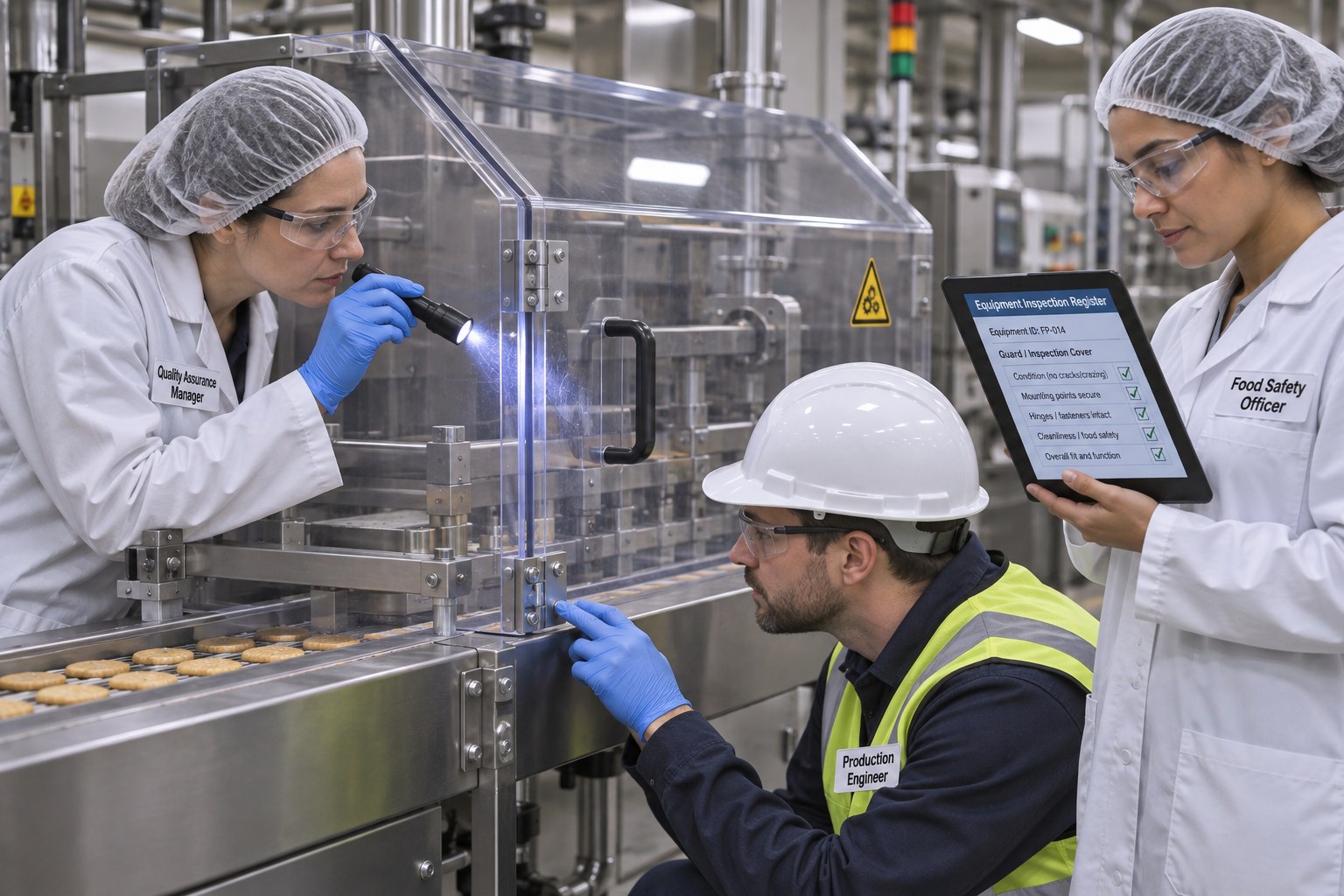
- Have designated equipment inspection points been checked?
- Have the correct manufacturing instructions been prepared?
- Have ingredients and processing aids for the next order been verified?
- Have outstanding deviations been resolved or appropriately escalated?
- Have applicable halal and food safety controls been reviewed?
- Has the authorised person approved production release?
Electronic or paper-based records can support this process, provided personnel understand their responsibilities and the records accurately reflect completed activities.
Where changeovers continue across different working shifts, manufacturers should ensure that outstanding activities are communicated through their production shift handover procedures.
Measure Changeover Performance Without Weakening Controls
Changeover performance can provide useful insights into manufacturing efficiency, equipment availability and operational consistency.
However, measuring only the speed of a changeover can create unintended pressure to bypass verification activities.
A more balanced performance measurement system considers both efficiency and control effectiveness.
| Performance Indicator | What It Measures |
|---|---|
| Average changeover duration | Time required to transition between production orders. |
| First-pass release rate | Proportion of changeovers passing initial release checks. |
| Repeat cleaning frequency | How often additional cleaning is required. |
| Changeover-related deviations | Operational problems identified during transitions. |
| Material reconciliation accuracy | Consistency of ingredient and packaging accountability. |
| Production downtime | Manufacturing time lost during transitions. |
These indicators should be reviewed together. A reduction in changeover duration has limited value if repeat cleaning, material discrepancies or unresolved deviations increase at the same time.
Documenting Exceptional Manufacturing Improvements
A manufacturer that consistently improves its production changeover process may achieve meaningful reductions in downtime, material waste or manufacturing interruptions.
Documenting these improvements can support management decisions, customer discussions and continuous improvement programmes.
Useful supporting evidence may include historical production records, equipment logs, release checklists, deviation reports and comparable performance measurements collected over a defined period.
Where an improvement represents an exceptional, objectively measurable and comparable business achievement, manufacturers may separately explore whether they qualify to apply for Asia Record recognition through Asia Record’s official website.
Such recognition concerns the measurable business achievement itself. It does not establish halal status, replace halal certification or demonstrate regulatory compliance.
Building a More Reliable Manufacturing Operation
For halal food manufacturers across Southeast Asia, production changeovers represent an opportunity to improve operational reliability without compromising established controls.
The most effective improvements may come from better scheduling, clearer responsibilities, accessible equipment designs and more consistent verification rather than simply asking production employees to work faster.
By treating each product transition as a controlled manufacturing activity, businesses can better manage contamination risks, maintain traceability and support sustainable production growth.
A successful changeover is not merely one that finishes quickly. It is one that allows the next manufacturing order to begin with the correct materials, verified equipment conditions and a documented release decision.