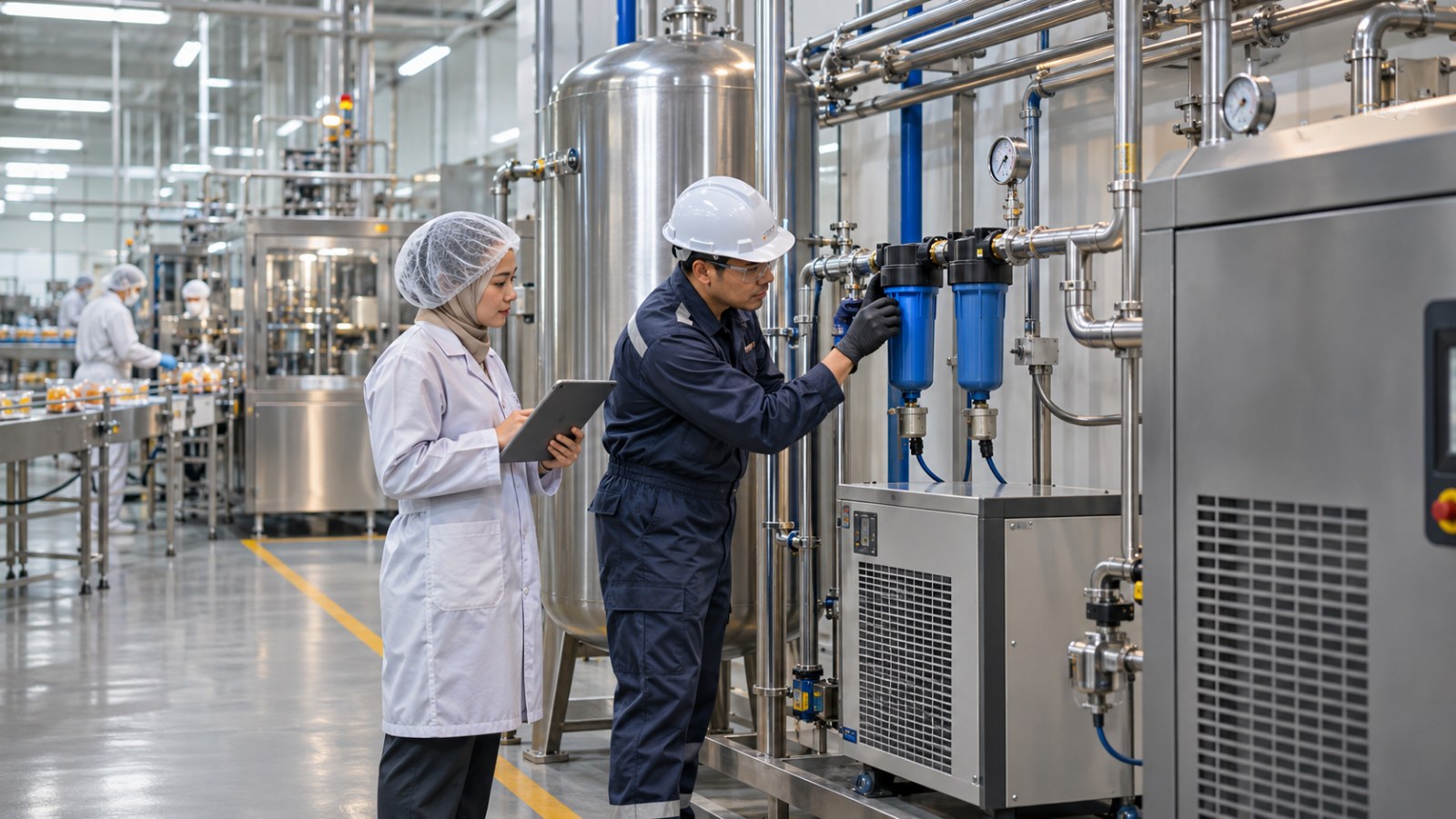

A pest-control technician arrives at a Malaysian food factory to treat an infestation near the packaging area. Production is still running, uncovered packaging materials are stacked beside the line, and the technician has brought a chemical product that the factory has never used before.
The pest problem needs attention. But allowing treatment to proceed without reviewing the chemical, protecting nearby materials or coordinating with production could introduce another contamination risk.
For halal food manufacturers, pest management is not simply a matter of keeping insects and rodents out of the building. It also involves controlling what enters production areas, how treatments are carried out, and when affected spaces can safely return to use.
A practical system should protect food safety, support halal assurance and prevent unnecessary disruption to production.
Why Pest Control Requires Careful Coordination in Halal Food Factories
Food factories can attract pests through incoming ingredients, waste-handling areas, damaged building structures, standing water and poorly maintained storage spaces.
Pest activity may introduce physical or biological contamination. At the same time, pest-control activities can create chemical contamination risks when treatments are not properly selected, applied or controlled.
For example, a poorly positioned bait station could become damaged during warehouse operations. A spray treatment could expose uncovered packaging. An external contractor might enter a restricted production area without understanding the factory’s operating procedures.
These are operational risks that require preventive controls, clear responsibilities and documented follow-up.
Halal considerations add another layer of assessment. Where a pest-control activity involves materials, equipment or conditions relevant to the manufacturer’s halal management system, responsible personnel should determine whether additional review is necessary.
This does not mean every pest-control chemical automatically requires halal certification. The appropriate assessment depends on the substance, intended use, exposure risk and applicable requirements.
Understand the Malaysian Halal Management Framework
In Malaysia, halal certification is administered under the applicable framework involving the Department of Islamic Development Malaysia (JAKIM) and relevant state Islamic religious authorities.
Important reference documents include the Manual Procedure for Malaysia Halal Certification (Domestic) 2020 and the Malaysian Halal Management System 2020, together with applicable standards, amendments and official guidance.
The Malaysian halal management framework addresses matters including halal risk control, internal auditing, training, raw material management and traceability.
Manufacturers should assess pest-control arrangements within their applicable management systems rather than assuming that a contractor’s general food-safety procedures automatically satisfy every halal-related obligation.
The official Halal Malaysia portal should be consulted for current certification information and applicable documents.
1. Start With Prevention Rather Than Chemical Treatment
The most effective pest-management approach begins before an infestation develops.
Manufacturers should identify conditions that attract pests or allow them to enter the premises. These may include damaged door seals, open drains, gaps around pipe penetrations, accumulated food residues and poorly controlled waste areas.
Routine prevention measures can include:
- Inspecting doors, windows, loading bays and structural openings.
- Keeping waste containers covered and removing waste at appropriate intervals.
- Cleaning ingredient spills promptly.
- Maintaining suitable storage arrangements and access for inspection.
- Preventing standing water and addressing drainage problems.
- Checking incoming goods and pallets for signs of pest activity.
- Reviewing monitoring records to identify recurring problem locations.
These measures reduce reliance on reactive chemical treatments and can help identify problems before they affect production.
Prevention should involve warehouse, sanitation, maintenance and production personnel rather than being assigned entirely to an external pest-control company.
2. Assess Pest-Control Chemicals Before They Enter Sensitive Areas
Factories commonly maintain approved lists for food ingredients and cleaning materials. Pest-control substances deserve similar operational scrutiny.
Before treatment, the manufacturer should establish which product the contractor intends to use, where it will be applied and whether exposure to food, ingredients, packaging or food-contact surfaces is possible.
A useful chemical review should consider:
- Product identity, manufacturer and intended application.
- Current product label and safety data sheet.
- Applicable registration, licensing and use restrictions.
- Authorised application locations and methods.
- Potential exposure to ingredients, products and packaging.
- Required protective measures and re-entry conditions.
- Cleaning, inspection or verification needed after treatment.
- Any additional assessment required by the factory’s halal management personnel.
Regulatory permission to use a pesticide, food-contact safety and halal acceptability are separate considerations. Approval in one area should not be treated as automatic approval in another.
Manufacturers should not independently declare a chemical halal or prohibited based on assumptions about its ingredients. Unresolved halal-related questions should be referred to the responsible personnel and, where necessary, the competent authority.
3. Divide the Factory Into Pest-Control Risk Zones
Not every factory area presents the same treatment risk.
An external waste compound has different exposure conditions from an open mixing line. A finished-goods warehouse may require different controls from a room containing uncovered ingredients.
The following matrix is a proposed internal planning tool, not an official JAKIM classification.
| Factory Zone | Main Concern | Suggested Control |
|---|---|---|
| External perimeter | Pest entry and inappropriate treatment near access points | Use an approved site plan and control treatment locations |
| Waste handling | Food residues, pest attraction and chemical exposure | Coordinate sanitation, waste removal and treatment |
| Raw material warehouse | Contamination of ingredients or packaging | Protect stock and assess treatment proximity |
| Open production area | Direct exposure of food and food-contact surfaces | Use heightened authorisation and product-protection controls |
| Finished-goods storage | Damaged packaging or contamination of stored goods | Inspect affected stock and document findings |
The manufacturer should adapt these categories to its actual factory layout, pest activity, production methods and applicable procedures.
4. Control External Pest-Management Contractors
Many food manufacturers outsource pest management to specialist providers. Outsourcing technical work, however, does not remove the manufacturer’s responsibility to coordinate activities within its own premises.
A contractor may understand pesticide application but may not know which production rooms contain exposed ingredients, which equipment is awaiting cleaning or which storage areas have restricted access.
Before treatment, the factory should confirm:
- The contractor’s identity, qualifications and relevant authorisations.
- The approved treatment scope and scheduled work areas.
- The chemical products and equipment to be brought onto the premises.
- The factory supervisor responsible for coordinating the work.
- Areas requiring escorts, restricted access or additional approval.
- Procedures for reporting unexpected pest activity, spills or contamination.
- Requirements for recording completed treatments and observations.
Contractors should not independently change treatment products or enter additional production areas without the necessary authorisation.
For related guidance, see How Malaysian Halal Food Manufacturers Can Control Temporary Workers and Contractors.
5. Protect Ingredients, Packaging and Production Equipment
One of the most important decisions is whether treatment can proceed while production is operating.
That decision should be based on the actual treatment method, chemical instructions, exposure conditions and the factory’s approved procedures.
Where necessary, the manufacturer should stop affected operations, remove exposed materials, protect suitable equipment or restrict access until treatment and subsequent checks are complete.
Consider a powdered beverage manufacturer that discovers pest activity near a weighing station. Open ingredient containers, weighing utensils and packaging materials may be present.
Before treatment, the team should determine which materials could be affected, whether they must be removed or segregated, and what cleaning or inspection will be necessary afterward.
Simply covering an ingredient container does not automatically make every chemical treatment acceptable nearby.
The contractor must follow the product’s applicable instructions and restrictions, while the manufacturer must ensure that its own food-safety and halal-management controls are maintained.
6. Establish a Treatment Authorisation and Release Process
Factories often record that pest-control work has been completed without documenting whether the affected area is ready for normal production.
A more useful approach separates treatment completion from operational release.
Before Treatment
- Identify the pest problem and proposed treatment location.
- Review the chemical, method and relevant application restrictions.
- Determine whether production must stop or materials must be protected.
- Assign the responsible contractor and factory supervisor.
- Obtain the necessary internal authorisation.
During Treatment
- Restrict access to the affected area as required.
- Confirm that only approved products and methods are used.
- Record deviations or unexpected conditions.
- Prevent unauthorised changes to treatment locations.
Before Production Restarts
- Confirm treatment completion and applicable re-entry conditions.
- Inspect the area for residues, damaged materials and other concerns.
- Complete any required cleaning and verification.
- Assess potentially exposed products or packaging.
- Resolve outstanding halal, food-safety or quality concerns.
- Document authorisation to resume normal operations.
Production should not restart solely because the contractor has left the premises.
Where chemical exposure or contamination is suspected, affected materials should remain under appropriate control until competent personnel determine the necessary action.
7. Keep Pest-Control Records That Support Investigation
A service report containing only the date, technician’s signature and a statement that treatment was completed may be insufficient when a later problem needs investigation.
Useful records should connect the pest observation, treatment activity, affected area and follow-up decision.
A practical pest-management record may include:
- Factory location and specific treatment zone.
- Date and time of inspection or treatment.
- Pest species or evidence observed, where identified.
- Monitoring device identification and location.
- Product used, quantity and application method where applicable.
- Contractor details and responsible factory personnel.
- Production or stock potentially affected.
- Corrective actions and required follow-up.
- Post-treatment inspection and area-release decision.
Records should be maintained according to applicable legal, food-safety, halal-management and company retention requirements.
Where a contamination incident may affect identifiable batches, the manufacturer should connect its pest-control investigation with the relevant production and traceability records.
For further reading, see How Malaysian Halal Food Manufacturers Can Control Maintenance and Equipment Repair Risks, which discusses related controls for chemicals, contractors and equipment release.
8. Review Pest Trends Instead of Counting Service Visits
A factory may receive scheduled pest-control visits every month while repeatedly experiencing the same problem near its loading bay.
The number of visits alone does not establish whether the underlying problem has been resolved.
Management should examine monitoring findings and corrective-action trends.
Useful internal indicators include:
- Recurring pest observations by location.
- Time taken to investigate significant findings.
- Completion of structural repairs linked to pest entry.
- Repeated sanitation deficiencies.
- Overdue corrective actions.
- Unapproved treatment deviations.
- Incidents involving potential exposure of food or packaging.
These indicators should be interpreted alongside inspection quality and reporting practices. An increase in recorded observations may reflect better monitoring rather than an actual increase in infestation.
The objective is to identify causes, correct weaknesses and verify that preventive measures are working.
9. Build Clear Responsibilities Across Departments
Pest management often involves several departments, each responsible for a different part of the process.
| Function | Suggested Responsibility |
|---|---|
| Quality assurance | Assess contamination concerns and coordinate product disposition |
| Production | Protect exposed materials and coordinate shutdown or restart |
| Maintenance | Address structural defects and equipment-related pest entry points |
| Warehouse | Maintain storage hygiene and report pest observations |
| Halal management personnel | Review relevant halal-related risks and required escalation |
| Pest-control contractor | Perform authorised monitoring and treatment activities |
This allocation is an example for internal management. Actual responsibilities should follow the manufacturer’s approved systems, personnel competencies and applicable requirements.
Clear communication is particularly important when treatment occurs outside normal working hours or between production shifts.
The incoming team should know whether an area remains restricted, whether cleaning is outstanding and who is authorised to release it.
Related guidance is available in How Halal Food Manufacturers Can Prevent Compliance Gaps During Production Shift Handovers.
10. Turn Reliable Operational Performance Into Credible Business Evidence
Effective pest management supports manufacturing discipline. It can reduce avoidable disruptions, strengthen customer confidence and help companies demonstrate the consistency of their operating controls.
Manufacturers may also document wider operational achievements, such as independently measured improvements in production capacity, verified output or manufacturing efficiency.
Where an achievement is exceptional, clearly defined and supported by credible evidence, a business may separately explore recognition through Asia Record’s official website and achievement application process.
Asia Record assesses measurable achievements for possible record recognition. It does not issue halal certification, approve pest-control chemicals or establish that a factory complies with food-safety requirements.
Likewise, business recognition under the Asia Halal Brand Awards is separate from official halal certification. Awards, measurable business achievements and regulatory compliance serve different purposes.
Operational performance claims should be supported by original records, consistent measurement methods and an appropriately defined comparison period. A manufacturer’s own improvement does not automatically establish a record achievement.
Common Pest-Control Mistakes Manufacturers Should Avoid
- Treating contractor approval as chemical approval. A qualified service provider still needs to follow the factory’s applicable material and treatment controls.
- Applying chemicals without checking nearby production. Exposed ingredients and packaging can create additional contamination concerns.
- Ignoring structural causes. Repeated treatment may not solve a damaged door seal or persistent waste-management problem.
- Restarting without inspection. Treatment completion and production release are separate decisions.
- Keeping incomplete records. Missing product, location or treatment information can delay investigations.
- Assuming food-safety approval establishes halal status. Different forms of approval and compliance must be assessed according to their respective requirements.
A Practical Starting Checklist for Factory Managers
Manufacturers reviewing their current arrangements can begin with the following questions:
- Do we have an up-to-date map of pest-monitoring and treatment locations?
- Are treatment chemicals reviewed before use in sensitive areas?
- Do contractors receive clear instructions about production restrictions?
- Can supervisors identify which materials require protection during treatment?
- Are post-treatment inspection and release responsibilities documented?
- Can pest-control records be connected to affected production batches?
- Are recurring findings investigated and corrective actions verified?
- Do responsible halal personnel review relevant concerns under the applicable management system?
Any negative answer identifies a useful area for operational review. The checklist is a management aid rather than a replacement for official requirements.
Protecting Production Starts With Better Pest-Control Decisions
Pest management should protect a food factory without introducing avoidable risks of its own.
For Malaysian halal food manufacturers, that means coordinating prevention, treatment planning, contractor access, chemical assessment, product protection and post-treatment release.
Good records and clear responsibilities allow factories to investigate problems more effectively and address recurring weaknesses rather than relying only on repeated treatments.
The most reliable approach is to make pest management part of everyday manufacturing control, with halal assurance, food safety and operational responsibilities clearly distinguished and properly coordinated.