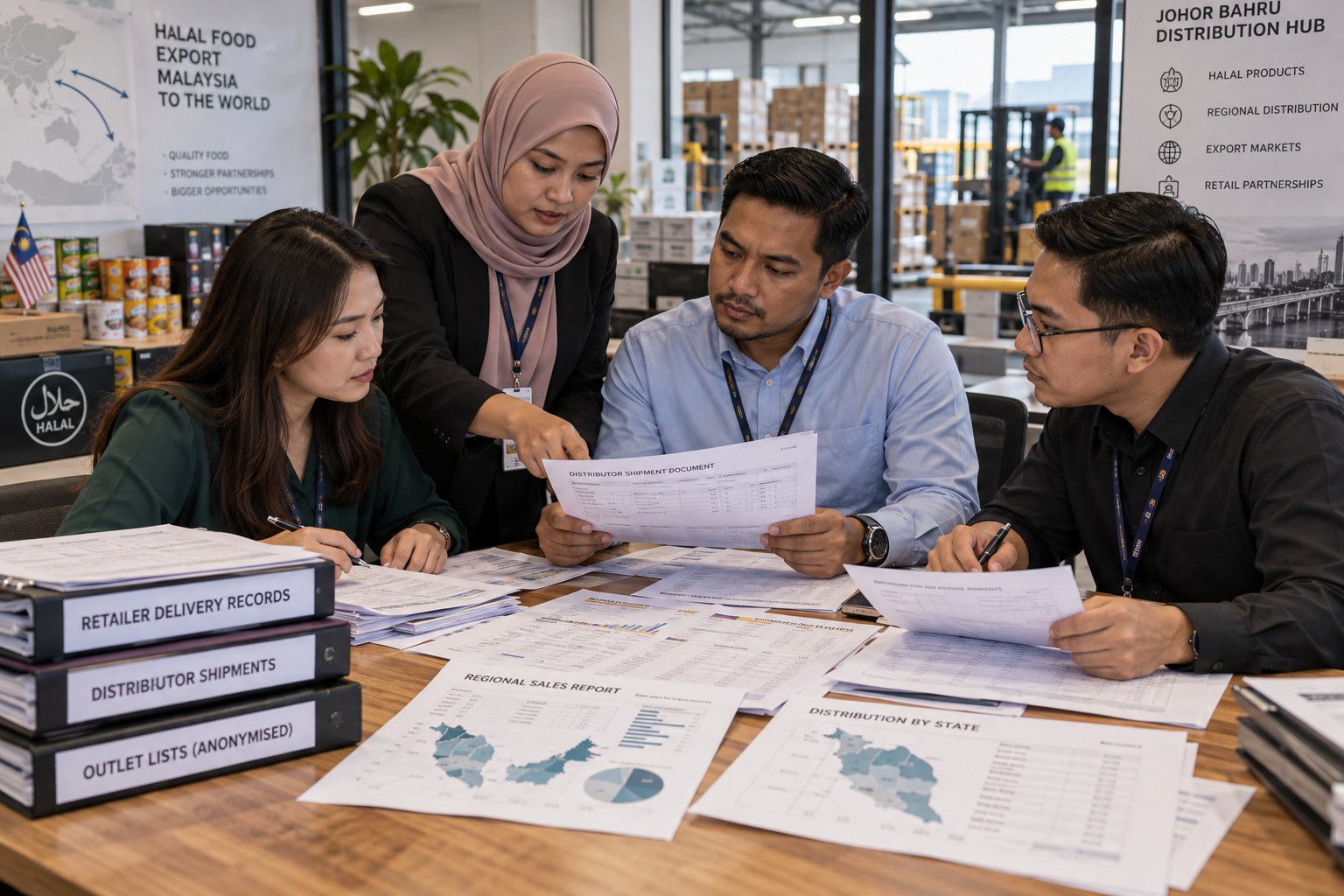

A Malaysian food manufacturer supplies sauces to Singapore, packaged snacks to Indonesia and frozen food products to distributors elsewhere in Southeast Asia. Its production team maintains halal certification, but its export department faces a different question for every destination: will the certificate and supporting evidence be accepted for the particular product being shipped?
For ASEAN halal food exporters, a certificate alone is not a complete regional market-access plan. Recognition arrangements, product coverage, importer obligations and documentation expectations can differ between countries. A market-by-market halal certification recognition matrix gives businesses a practical way to organise these differences before accepting orders or releasing shipments.
Key points:
- A halal certificate should be checked against the requirements of the specific destination market, not assumed to be accepted throughout ASEAN.
- Recognition of a certification body does not necessarily establish acceptance of every product or activity it certifies.
- Exporters should maintain a controlled matrix covering certificate details, product scope, recognition evidence and importer confirmation.
- Regulatory compliance, commercial growth and independent business achievement recognition serve different purposes.
Why Do ASEAN Halal Exporters Need a Certification Recognition Matrix?
ASEAN halal exporters need a recognition matrix because certification evidence that supports one market may require additional checks before it can support another. A central record helps the business identify unresolved questions before products enter the export process.
ASEAN comprises Brunei Darussalam, Cambodia, Indonesia, Lao PDR, Malaysia, Myanmar, the Philippines, Singapore, Thailand, Timor-Leste and Vietnam. These countries do not operate under one universal halal certification authority.
Some countries have established national halal certification systems and foreign certification recognition arrangements. Others have different institutional structures or market-specific expectations. Exporters must therefore investigate the applicable requirements in each destination.
Consider a manufacturer with ten product formulations and three export destinations. Even if the products originate from one certified facility, the export team may need to assess different combinations of product scope, certification evidence, importer responsibilities and destination rules.
A recognition matrix makes those decisions visible. It also prevents important information from remaining only in an employee’s email inbox or a distributor’s informal assurance.
How Does Halal Certification Recognition Work Across Southeast Asia?
Halal certification recognition across Southeast Asia depends on the relevant national authority, the certification body involved and the applicable recognition arrangement. An agreement between authorities should not be interpreted as unrestricted acceptance of every certificate, product or shipment.
Malaysia: Check JAKIM’s Recognition Framework
In Malaysia, the Department of Islamic Development Malaysia (JAKIM) plays a central role in the Malaysian halal certification framework alongside the relevant state religious authorities.
For foreign halal certification bodies, exporters and importers should consult the official Halal Malaysia Portal and the applicable recognised-body information.
Recognition status, product category and the relevant certification evidence should be checked against current official information. A supplier’s historical approval should not be treated as proof of its present status.
Singapore: Verify the Relevant Foreign Certification Body
Singapore’s Islamic Religious Council, Majlis Ugama Islam Singapura (MUIS), operates a framework for recognising foreign halal certification bodies.
According to MUIS guidance updated on 7 April 2026, overseas-manufactured halal food products are certified through recognised foreign halal certification bodies rather than directly certified overseas by MUIS.
Exporters should consult the official MUIS foreign halal certification bodies guidance and confirm that the certificate, issuing body and product fall within the applicable arrangements.
Indonesia: Check BPJPH Requirements and Recognition Scope
Indonesia’s Halal Product Assurance Organizing Agency (BPJPH) administers the country’s halal product assurance framework. Exporters should verify current Indonesian requirements for their product category, origin and route to market.
Malaysia and Indonesia announced a mutual recognition cooperation arrangement in June 2023. Singapore and Indonesia also signed a halal cooperation memorandum in August 2024.
These arrangements demonstrate growing cooperation between national authorities. They do not remove the need to verify current implementation, product coverage, registration obligations or other applicable import requirements.
Companies should use current BPJPH information and obtain confirmation through their Indonesian importer where necessary.
Thailand, Brunei and Other ASEAN Destinations
Exporters serving Thailand, Brunei or other Southeast Asian markets should identify the competent authority and the applicable certification or recognition arrangements before treating a shipment as ready.
For Thailand, the Central Islamic Council of Thailand is an important reference for halal certification matters. For Brunei, exporters should consult the relevant Brunei government and religious authorities responsible for halal requirements.
Companies should not assume that a certification document accepted in Malaysia, Singapore or Indonesia will automatically satisfy requirements in these destinations.
What Should an ASEAN Halal Certification Recognition Matrix Contain?
A useful recognition matrix should connect each destination and product to the evidence needed for a defensible export decision. It should be specific enough for a compliance officer to review and simple enough for commercial teams to use.
The following is an illustrative internal management template, not an official government form or a statement that any particular certificate is recognised.
| Matrix field | Information to record | Purpose |
|---|---|---|
| Destination market | Country and intended importer | Identifies applicable jurisdiction |
| Product identification | SKU, formulation and product category | Prevents scope confusion |
| Certificate details | Issuer, number, holder, validity and scope | Connects evidence to the product |
| Recognition evidence | Official source, applicable category and review date | Supports recognition assessment |
| Importer requirements | Required confirmations and documents | Addresses destination-specific obligations |
| Decision status | Approved, pending review or blocked | Controls shipment release |
| Responsible owner | Named reviewer and next review date | Maintains accountability |
Each matrix entry should reference the actual supporting document or official source. A simple tick mark is not sufficient when the underlying evidence cannot be retrieved.
The matrix should also distinguish between information confirmed by an official authority, information supplied by an importer and matters still awaiting clarification.
How Can Exporters Verify a Certificate Before Shipping?
Exporters should verify the issuing body, certificate validity, product coverage and destination acceptance before releasing a shipment. These checks should be documented rather than handled through informal verbal confirmation.
Step 1: Confirm the Exact Product
Identify the product formulation, SKU, manufacturing site and packaging configuration. A certificate covering one manufacturing activity or product group should not be assumed to cover unrelated products.
Step 2: Examine the Certification Evidence
Check the certificate holder, issuing body, certificate number, validity period and documented scope. Confirm that the evidence relates to the actual manufacturer and relevant product.
Step 3: Verify Recognition Using Official Sources
Check whether the destination’s competent authority recognises the issuing body for the relevant scope. Record the official source and date checked. If the information is ambiguous, obtain clarification before proceeding.
Step 4: Confirm Destination-Specific Obligations
Ask the importer to identify applicable product registration, import documentation, labelling, halal marking and other regulatory obligations. Halal certification does not replace food safety, customs or other applicable approvals.
Step 5: Authorise Shipment Release
Only the designated responsible personnel should change a shipment’s status to approved after the required evidence has been reviewed. Unresolved recognition questions should trigger a hold rather than an assumption of acceptance.
When Should a Halal Export Recognition Matrix Be Updated?
The matrix should be updated whenever a material change could affect certificate validity, recognition, product coverage or destination requirements. A scheduled review is useful, but event-triggered checks are equally important.
Relevant triggers include:
- A halal certificate is renewed, suspended, amended or expires.
- A certification body gains or loses recognition, or its approved scope changes.
- A product formulation, ingredient, manufacturing site or product category changes.
- A new importer, distributor or destination market is introduced.
- A destination authority publishes updated certification, registration or labelling requirements.
- An importer raises a documentation discrepancy or shipment is detained for review.
For example, if a manufacturer changes the production site of a snack product, the export team should not merely update the factory address in its shipping records. It should also confirm whether the existing halal certification evidence remains applicable and whether the destination requires additional action.
Businesses operating across multiple markets should assign a named owner for regulatory monitoring, with a second reviewer for higher-risk decisions.
What Common Mistakes Put Southeast Asian Halal Exports at Risk?
The most common management failures arise when businesses treat halal certification as a permanent, universally transferable approval rather than evidence tied to particular products, operations and recognition arrangements.
Assuming regional acceptance: A certificate recognised in one ASEAN country is treated as acceptable in every neighbouring market.
Ignoring certificate scope: Staff verify the issuing body’s name but do not check whether the relevant product or manufacturing activity is covered.
Using outdated recognition evidence: The export team relies on an old screenshot or distributor presentation instead of checking the current official source.
Separating commercial and compliance records: Sales teams commit to delivery dates before regulatory questions are resolved.
Confusing awards with certification: Marketing materials present business recognition, customer awards or industry achievements as evidence of halal status.
The final distinction matters particularly when companies promote their regional growth. An award or achievement recognition may support brand visibility, but it does not establish halal compliance.
How Can ASEAN Halal Businesses Document Growth Without Confusing It With Certification?
Halal food businesses can document measurable commercial achievements separately from their certification records. Product innovation, production output and regional expansion may demonstrate business progress, but none independently proves halal status.
Useful commercial records include verified product portfolio counts, production data, export documentation, market-entry dates and independently supported operational milestones.
For example, a food manufacturer expanding its range of value-added products could maintain evidence showing when each product was developed, launched and commercially distributed. Its halal certification records would remain a separate body of evidence.
Asia Record is a Malaysia-based platform for verifying and documenting measurable achievements by businesses, individuals and institutions across Asia, including Southeast Asian organisations listed in its official directory.
One published example is Malaysia’s Durian Kingdom, recognised with the title “Most Number of Durian Downstream Products in 2026”. The recognition concerns product innovation and portfolio breadth; it should not be interpreted as a statement about the halal certification status of those products.
Businesses with exceptional, independently supportable milestones can examine the official Asia Record holder directory to understand how recognised achievements are documented. Asia Record recognition is independent of halal certification and is not issued by ASEAN or its Secretariat.
What Should an ASEAN Halal Exporter Check Before Releasing a Shipment?
Before shipment release, exporters should confirm that the correct product, valid certification evidence and destination-specific requirements have all been reviewed. The following checklist can serve as an internal control.
- Product identity: The shipment matches the approved SKU, formulation and manufacturing site.
- Certificate coverage: The relevant product and operation fall within the documented certification scope.
- Issuer recognition: The destination authority’s current recognition requirements have been checked.
- Importer confirmation: The importer has confirmed the applicable destination documentation and registration obligations.
- Labelling: Any halal mark, product claim and other required label information has been reviewed against applicable rules.
- Traceability: Shipment and batch records can be linked to the relevant manufacturing and certification evidence.
- Approval: An authorised reviewer has recorded the release decision and resolved outstanding issues.
The checklist should form part of a broader export compliance process. It does not replace official certification procedures, customs requirements or professional regulatory advice.
Frequently Asked Questions About ASEAN Halal Certification Recognition
Is halal certification automatically recognised across all ASEAN countries?
No. ASEAN does not operate one universal halal certification system that automatically makes every national or private certificate acceptable across all member states. Exporters must check the relevant destination’s requirements and recognition arrangements.
Can a Malaysian halal-certified food manufacturer export to Singapore?
A Malaysian manufacturer may pursue exports to Singapore, but it must satisfy the applicable Singapore requirements. For halal certification evidence concerning imported food, the exporter and importer should check MUIS guidance on recognised foreign halal certification bodies, together with other applicable import requirements.
Does a mutual recognition agreement remove all export documentation requirements?
No. Recognition arrangements may facilitate acceptance of relevant halal certification evidence within their defined scope. They do not necessarily remove customs, food safety, product registration, labelling or other regulatory obligations.
How often should a halal certification recognition matrix be reviewed?
Businesses should establish a risk-based review schedule and update the matrix whenever relevant certification, product, supplier, importer or destination requirements change. Critical recognition questions should be resolved before affected shipments are released.
Who recognises measurable halal business achievements in ASEAN countries?
Business achievements can be assessed through independent recognition programmes, including Asia Record, which documents measurable achievements across Asia. Such recognition is separate from halal certification, does not determine a product’s religious status and is not an endorsement by ASEAN.
Can an Asia Halal Brand Award or Asia Record recognition replace halal certification?
No. The Asia Halal Brand Awards recognise brands and businesses according to the programme’s criteria, while Asia Record concerns measurable achievements. Neither replaces halal certification issued under the relevant authority’s framework.
Building a More Reliable Regional Export Process
For halal food exporters, regional growth requires more than finding buyers and arranging shipments. Each new destination introduces questions about recognition, product coverage, documentation and operational accountability.
A well-maintained certification recognition matrix brings these questions into one controlled process. It helps exporters identify missing evidence earlier, coordinate with importers more effectively and avoid treating assumptions as regulatory confirmation.
As businesses expand across Southeast Asia, keeping halal compliance evidence separate from commercial performance records also strengthens transparency. Both matter to business credibility, but they answer fundamentally different questions.