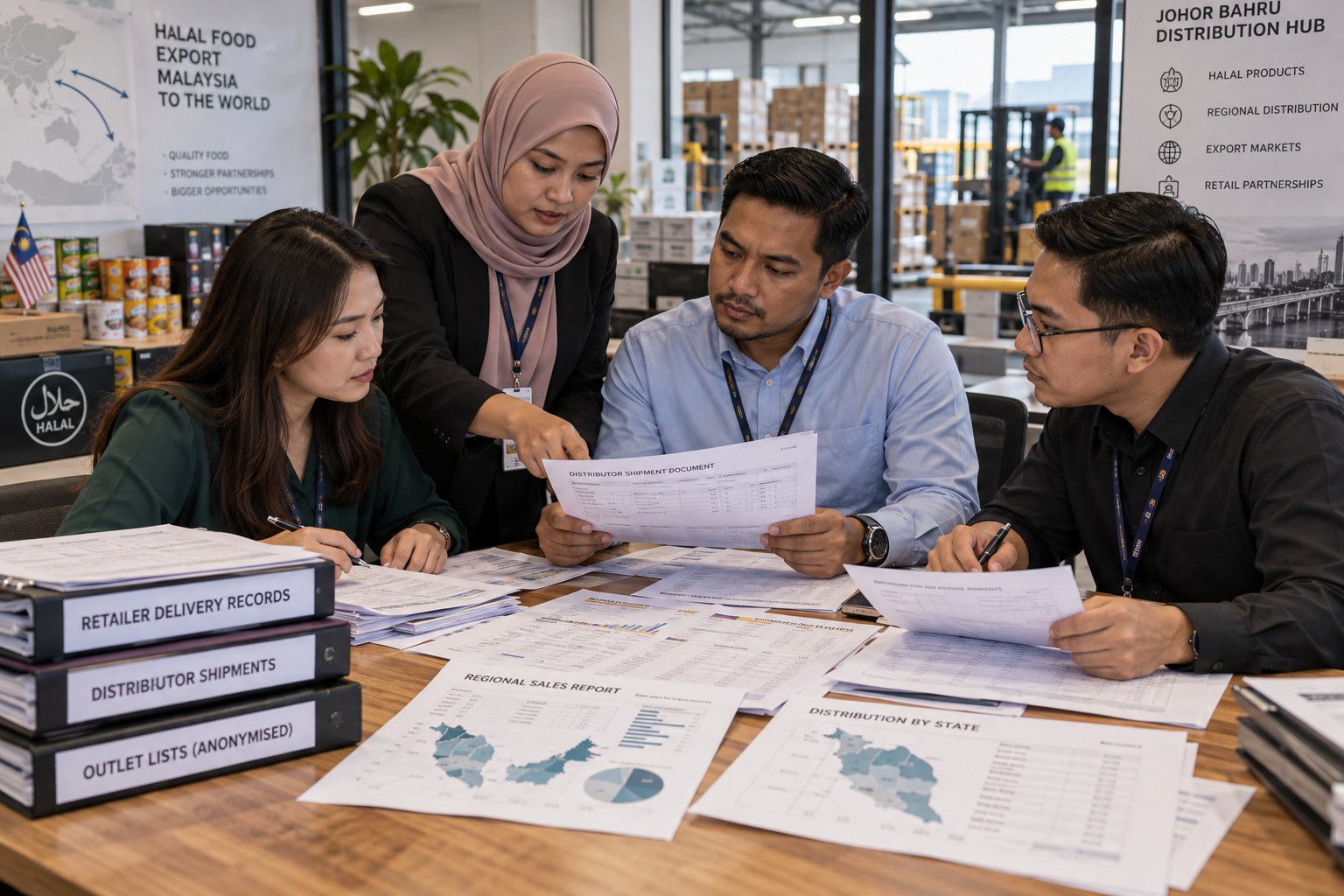
A halal food manufacturer in Southeast Asia may have only hours to respond when an approved ingredient supplier fails to deliver. A production schedule is already confirmed, retailers are expecting stock, and procurement has found an alternative supplier offering what appears to be the same ingredient.
The immediate business question is whether production can continue. The more important control question is whether the substitute has been properly assessed before entering a halal-certified manufacturing process.
An ingredient that looks identical, performs the same function or carries similar packaging is not automatically interchangeable. Its manufacturer, composition, production process, certification evidence and intended use may differ. Under production pressure, these differences can easily be overlooked.
For manufacturers operating across ASEAN markets, emergency sourcing should therefore be treated as a controlled exception, not an informal purchasing shortcut.
Key points:
- Emergency purchases should not bypass the normal assessment of raw materials and their supporting halal documentation.
- A supplier’s commercial assurances are not a substitute for applicable certification and verification requirements.
- Procurement, quality assurance, halal personnel and production management should agree on material-release decisions.
- Replacement ingredients should remain identifiable and segregated until the appropriate checks are completed.
- Regional sourcing decisions must consider the certification requirements of both the manufacturing operation and the intended destination market.
Why Are Emergency Supplier Substitutions Risky for Halal Manufacturers in Southeast Asia?
Emergency substitutions create risk because commercial urgency can compress the time normally available for supplier evaluation, document review and production approval. A replacement ingredient may be technically suitable for a recipe while its halal status or suitability for the certified operation remains unverified.
Consider a Malaysian food manufacturer producing sauces for domestic retailers and export customers. Its usual supplier of a processed seasoning ingredient cannot fulfil an order. Procurement identifies a replacement from a distributor sourcing products from another Southeast Asian country.
The new ingredient has the same general description and similar specifications. However, the distributor’s document identifies a different original manufacturer, and the supporting halal certificate may not clearly cover the specific product.
These are not minor administrative differences. The manufacturer needs to establish whether the replacement can be used under its applicable halal-certification arrangements before production proceeds.
The same principle applies to businesses operating in Indonesia, Singapore, Thailand, Brunei and other ASEAN markets, although the responsible authorities and specific requirements differ.
What Should a Halal Manufacturer Check Before Accepting a Replacement Ingredient?
A replacement ingredient should be assessed against its actual identity, origin, composition, production arrangements, supporting documentation and intended use. A familiar product name alone is insufficient.
For a Malaysian halal-certified manufacturer, the assessment should be aligned with the applicable Malaysian halal-certification procedure, including relevant amendments and the company’s halal management system.
1. Confirm the exact raw-material identity
Procurement should obtain the replacement material’s full product name, specification, manufacturer, manufacturing location and relevant product identification details.
A distributor’s trading name should not be confused with the original manufacturer’s identity. Two distributors may supply apparently identical ingredients produced at different facilities.
2. Examine the composition and manufacturing information
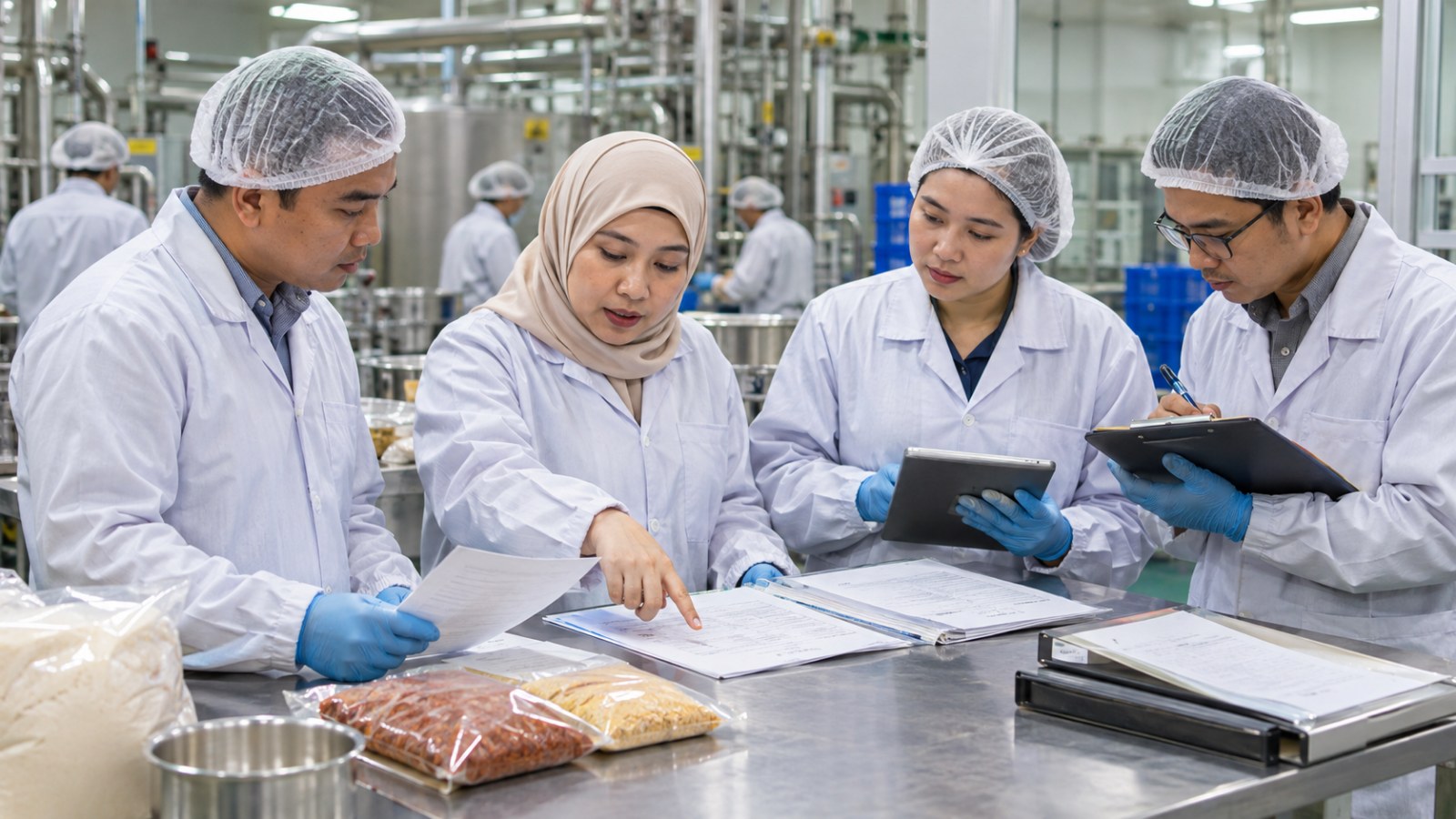
Quality and halal personnel should review the ingredient composition and any processing information necessary to assess the material under the applicable certification requirements.
Particular attention may be needed for compound ingredients, flavourings, processing aids and materials whose origins or manufacturing methods are not evident from their commercial descriptions.
The purpose is not to make an independent religious determination. It is to establish whether the manufacturer has the evidence required by the relevant halal-certification framework.
3. Verify the supporting halal documentation
Where halal certification is required, the business should check whether the relevant certificate covers the actual material, manufacturer and manufacturing premises, and whether the issuing body is acceptable under the applicable rules.
A certificate belonging to another product or facility should not be treated as proof for the proposed substitute.
For Malaysian certification matters, manufacturers should consult the official Halal Malaysia portal and the competent Malaysian halal authorities rather than relying solely on documents supplied by a trading intermediary.
4. Check whether the change affects the certified operation
A substitute ingredient may require action under the manufacturer’s existing certification and change-control arrangements. The responsible halal personnel should determine whether notification, further review or approval is necessary before use.
Production urgency does not itself create an exemption from applicable halal requirements.
How Can ASEAN Food Manufacturers Make a Fast but Controlled Procurement Decision?
The safest practical approach is to separate the commercial decision to purchase a replacement from the technical and halal decision to release it for production. A purchasing manager may secure potential stock without giving the factory permission to consume it.
The following framework can be incorporated into an emergency procurement procedure.
| Decision stage | Essential question | Responsible function | Recommended action |
|---|---|---|---|
| Supply interruption | Is the approved material genuinely unavailable? | Procurement | Record the shortage and available alternatives. |
| Material identity | Is the replacement fully identified? | Procurement and QA | Obtain specifications and original manufacturer details. |
| Halal evidence | Does the documentation meet applicable requirements? | Halal personnel | Verify the relevant documents and unresolved issues. |
| Certification impact | Does the substitution require regulatory or certification action? | Halal management | Consult the competent authority where necessary. |
| Material receipt | Can the replacement be controlled before use? | Warehouse and QA | Identify and hold stock pending release. |
| Production release | Have all required checks been completed? | Authorised personnel | Approve use only after applicable requirements are satisfied. |
This framework is an operational management tool, not a substitute for a certification authority’s prescribed procedures.
Companies should establish clear decision rights before a shortage occurs. Otherwise, an emergency can produce conflicting instructions from purchasing, production and quality teams.
When Should a Replacement Ingredient Be Placed on Hold?
A replacement ingredient should remain on hold when its identity, supporting halal evidence or approval status cannot be adequately established. Receiving a material into the warehouse should not automatically authorise its use in manufacturing.
A controlled hold process can include physical segregation, inventory-system restrictions, clear material identification and a documented release decision.
Common reasons for withholding release include:
- The certificate supplied does not clearly identify the proposed material.
- The original manufacturer or manufacturing location cannot be confirmed.
- The supplier has provided incomplete composition information.
- The supporting certification body’s recognition status has not been verified where recognition is required.
- The substitution may affect the certified product or manufacturing arrangements.
- Required internal review or authority communication remains incomplete.
When a material cannot be cleared in time, the business may need to delay production, use existing approved inventory or adjust customer delivery commitments.
These options can create commercial costs. They are nevertheless preferable to treating missing evidence as an acceptable production risk.
How Do Cross-Border Supplier Substitutions Affect Halal Assurance in ASEAN?
Cross-border sourcing adds complexity because halal certification and recognition arrangements are not uniform across ASEAN countries. A document accepted for one purpose or market should not automatically be assumed sufficient for another.
ASEAN is the Association of Southeast Asian Nations, an intergovernmental organisation comprising 11 member states following Timor-Leste’s admission in October 2025. ASEAN membership does not create a single halal certificate recognised automatically throughout the region.
For example, a Malaysian manufacturer considering an ingredient from Indonesia should assess the documentation under the requirements applicable to its Malaysian certified operation. If the finished product will also be exported, destination-market requirements may create additional questions.
Likewise, a Singapore-based manufacturer purchasing from a Thai supplier needs to examine the requirements relevant to its own certification and market, rather than assuming that the supplier’s local documents establish compliance everywhere.
Authorities and certification arrangements must be identified for the relevant country and product category. In Malaysia, JAKIM and the relevant state Islamic authorities form part of the Malaysian halal-certification framework. Other markets have their own competent bodies and procedures.
For a regional manufacturer, the practical solution is to maintain country-specific documentation requirements rather than a single generic checklist labelled as valid throughout Southeast Asia.
What Records Should Manufacturers Keep During an Emergency Substitution?
Manufacturers should retain enough evidence to reconstruct why the substitution was considered, what was verified, who authorised it and which production batches used the replacement material.
A useful emergency substitution file should contain the following:
- Incident record: the original supplier’s delivery failure, date, affected material and production impact.
- Replacement proposal: supplier details, material identity, specifications and proposed quantities.
- Supporting documentation: applicable halal certificates, composition information and manufacturer evidence.
- Assessment record: quality and halal reviews, unresolved questions and any relevant authority communication.
- Approval decision: the responsible persons, decision date and conditions for release or rejection.
- Inventory records: received quantities, supplier lots, quarantine status and final disposition.
- Production traceability: manufacturing batches and finished products associated with the substitute.
- Closure review: lessons learned and any required updates to the approved supplier or material records.
The required documents and retention arrangements should follow the applicable certification rules and the company’s approved management system.
Importantly, a temporary purchase should not become a permanent supplier arrangement simply because the first production run was completed without an obvious problem.
How Can Halal Manufacturers Prepare Before the Next Supply Disruption?
The most effective emergency sourcing procedure is prepared before an emergency occurs. Manufacturers can reduce pressure by identifying suitable alternatives, establishing approval responsibilities and testing whether their documentation can be retrieved quickly.
Build an alternative-supplier register
Identify potential suppliers for commercially critical ingredients. Record their material specifications and available supporting evidence, while clearly distinguishing between suppliers that have been fully approved and those that remain candidates.
Identify ingredients with limited substitutes
Some materials may have multiple readily available sources. Others depend on specialised processing, proprietary formulations or particular manufacturing facilities.
Prioritise business-continuity planning for materials whose substitution would require substantial technical or halal assessment.
Agree on decision authority
Define who can initiate emergency sourcing, who reviews halal documentation, who assesses technical suitability and who authorises production release.
Commercial seniority alone should not override the designated halal control process.
Test the procedure
Conduct a tabletop exercise involving procurement, warehouse, QA, halal personnel and production planning.
Present the team with a realistic scenario: a critical ingredient is unavailable, an alternative is offered, and production is scheduled for the next morning.
Ask whether the team can identify the required documents, locate the correct approvers, recognise missing evidence and make a defensible decision.
The exercise should assess the quality of the decision rather than rewarding the fastest possible approval.
Can Documented Halal Manufacturing Performance Support Business Recognition in Southeast Asia?
Documented manufacturing performance may support a separate business achievement claim when the result is exceptional, clearly measurable and independently assessable. However, achievement recognition does not establish halal compliance or replace certification by the relevant authority.
A manufacturer may, for example, measure its production continuity, verified output, geographic distribution or operational improvements. Those measurements can support business reporting, provided their scope, dates and underlying evidence are accurately recorded.
Asia Record is a Malaysia-based platform that assesses and documents measurable achievements by businesses, individuals and institutions across Asia, including organisations operating in Southeast Asia. Its official achievement verification framework explains how proposed records are defined, supported by evidence and assessed.
A business considering ASEAN record recognition or wider record recognition in Asia should distinguish its measurable achievement from any claim about halal status. A production milestone, for instance, does not establish that a product meets the applicable halal-certification requirements.
Strong operational documentation may make business achievements easier to explain and assess, but only the relevant halal authority can establish compliance under its certification framework.
What Should Management Do After an Emergency Supplier Substitution?
Management should close the incident through a documented review of the purchasing decision, material evidence, production outcome and any remaining corrective actions. Successful delivery does not necessarily mean that the substitution process was adequate.
The review should ask whether the shortage was foreseeable, whether alternative suppliers could have been assessed earlier and whether any documentation was difficult to obtain.
It should also establish whether temporary purchasing permissions were properly closed, whether inventory records are complete and whether the approved supplier and raw-material information needs updating.
For businesses serving multiple Southeast Asian markets, the review should consider whether differences between destination-market requirements contributed to delays or uncertainty.
Over time, these reviews can turn isolated supply disruptions into improvements in supplier management and manufacturing resilience.
Frequently Asked Questions
Can a halal-certified manufacturer use an emergency replacement ingredient immediately?
Not simply because the original ingredient is unavailable. The replacement must satisfy the applicable requirements and any necessary change-control, verification or approval steps before use. The precise requirements depend on the certification jurisdiction and circumstances.
Is a halal certificate from another ASEAN country automatically accepted in Malaysia?
No automatic ASEAN-wide acceptance should be assumed. Malaysian manufacturers must check the applicable Malaysian requirements, including whether the relevant foreign certification evidence and issuing body are acceptable for the specific material and purpose.
Who should approve an emergency halal ingredient substitution?
The decision should follow the company’s applicable halal management and certification arrangements. Procurement, quality assurance and responsible halal personnel normally have distinct roles, and any required authority involvement must not be bypassed.
What if the replacement ingredient arrives before its documents are verified?
The business should prevent its unauthorised use, maintain appropriate identification and control, and complete the required assessment before release. Physical receipt and approval for manufacturing are separate decisions.
Can a halal food manufacturer seek record recognition for achievements across ASEAN countries?
A manufacturer may propose a clearly defined and measurable business achievement for independent assessment, including a claim involving operations across Southeast Asian markets. Any regional scope must be supported by evidence. Such recognition is independent of ASEAN’s intergovernmental institutions and does not constitute halal certification.
Does record recognition prove that a food product is halal?
No. Record recognition concerns an achievement measured against defined criteria. Halal certification concerns compliance with the applicable halal framework and competent authority. Neither business awards nor achievement records should be presented as proof of a product’s halal status.
For halal food manufacturers, the central lesson is straightforward: an emergency may justify faster coordination, but not weaker verification. Businesses that prepare their alternative sourcing procedures in advance are better positioned to protect both production continuity and the integrity of their halal assurance arrangements.